
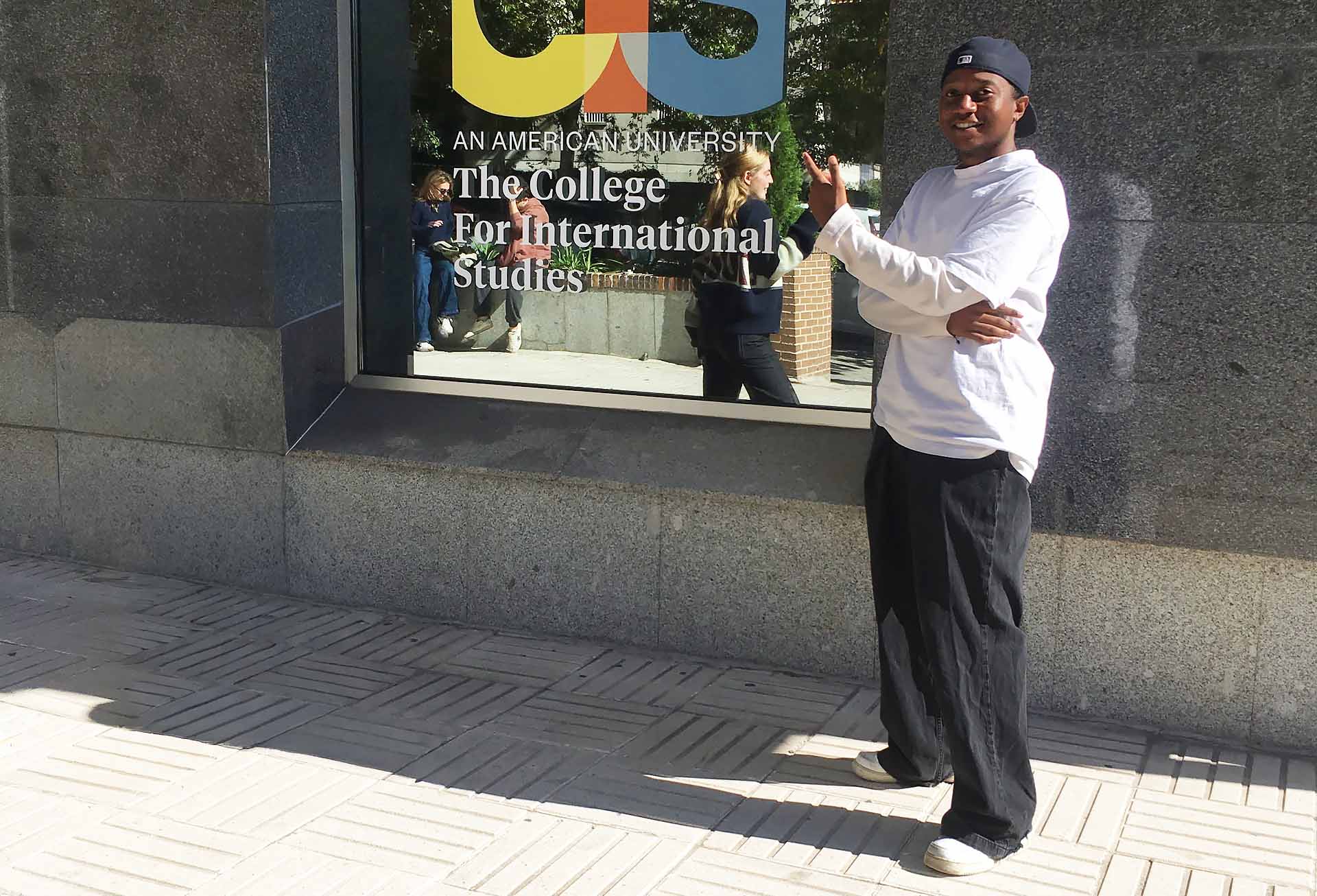
By Paula Gibaja
Living abroad is bittersweet, as it is not all roses and violets. It takes flexibility, curiosity, and an open mind to adapt to new cultures and challenges. For many students, studying in a new country is both exciting and intimidating. For Tinashe Mtetwa, having lived in Zimbabwe, South Africa, the U.S., and now Madrid, he is no stranger to change. But when he decided to move to Spain to continue his studies at CIS University, he did not know how much this experience would shape him. In this interview, he shares what it is like to adapt to a new culture, balance studies and social life, and find a sense of community far from home.
How did you first hear about CIS University and decide to study here?
I heard about CIS University during my two years at Endicott College, which is CIS University’s American sister school. After living in the U.S. for four years, two years of high school, and two years of college, I wanted to study somewhere new. I decided to move my studies to a place I had not been before.
What made you choose CIS University over other universities?
Multiple reasons. I really enjoy smaller classrooms where I can ask questions and my teachers actually know who I am. It also made it easy to transfer my credits from Endicott College.
How would you describe your overall experience as an international student at CIS University?
It’s much better than I expected. I thought it would be very difficult for me to actually integrate myself into Spain, but over time, I found that to be quite easy. At CIS University, it feels like everyone is an international student, so no one feels out of place. It’s also a blessing that I get to hear experiences from people all over Europe and Latin America, and that’s made my overall experience even more amazing.
What has been your favorite part about studying at CIS University so far?
The small classrooms, the friends I’ve made, and the quality of teaching. The professors have diverse teaching styles, which I really like. I don’t enjoy a very black-and-white type of teaching style, so seeing teachers adapt their methods has actually improved me as a student.
What do you think makes CIS University different from other universities?
It’s tight-knit. You know your teachers personally. Once the class is over, ou can talk to them about academic stuff and real-life things. I’ve actually become friends with some of my professors. That kind of environment changes how you learn; it’s easier to listen when it’s someone you trust.
How have your classmates and teachers made an impact on your experience here?
I feel a sense of psychological safety here. I can make mistakes, learn from them, and not feel judged. My classmates challenge how I think, too. Sometimes a simple comment in class can make me rethink something I believed for years.
What advice would you give to new international students coming to CIS University?
You can be yourself here. Don’t be afraid to talk to people, ask questions, even simple ones like ‘Hi, where are you from?’ That’s how you make connections. Everyone’s from somewhere different, and that makes CIS University really special.
Looking back, how has your time at CIS University changed or influenced you as a person?
It’s changed my idea of friendship, time management, and personal growth. I even did an art internship here that helped me figure out what I want to do in life. CIS University gave me direction, and it’s been a big part of who I’m becoming.