
By Silvana González
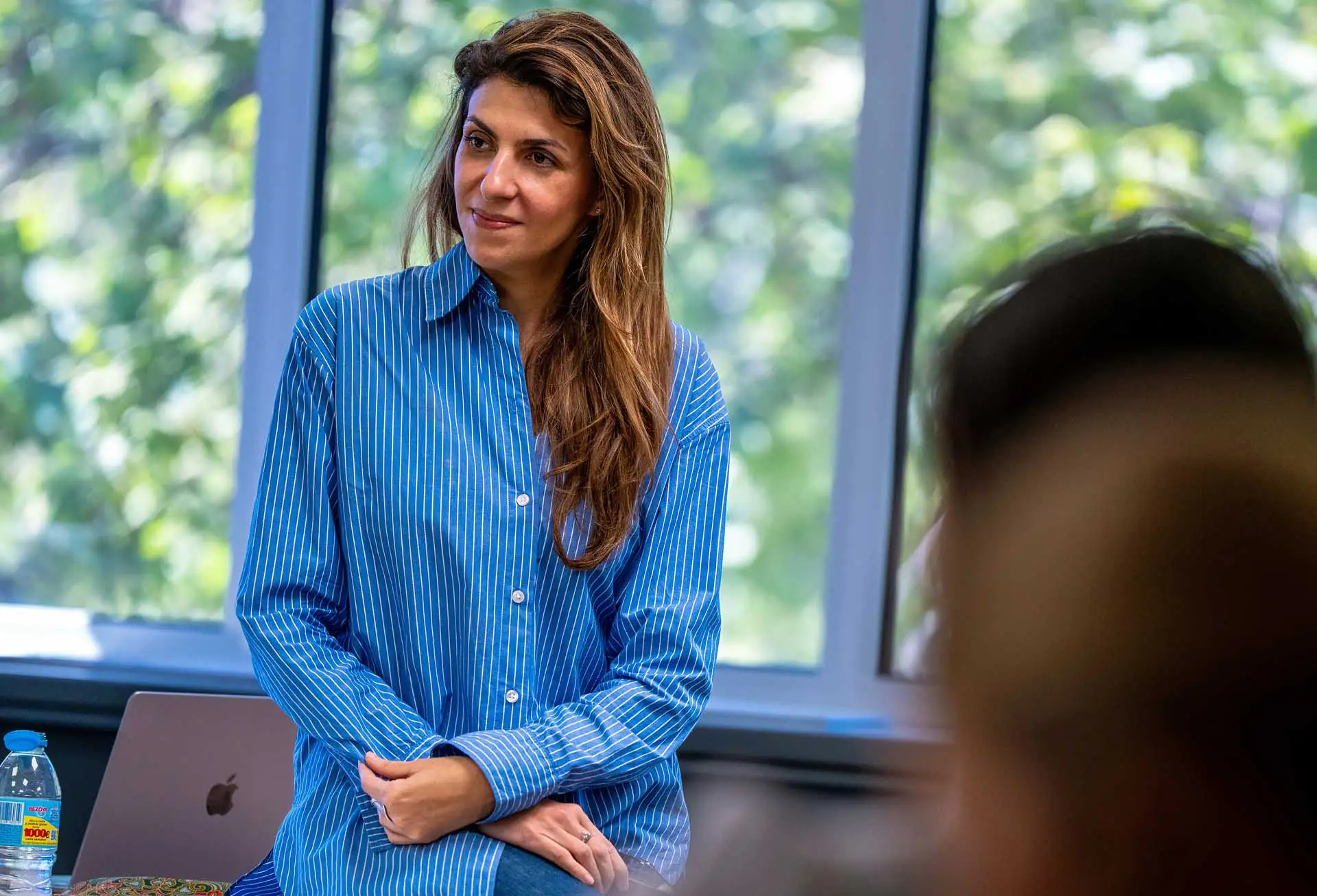
When you first meet Professor Laura López, you notice her calm confidence and the way she seems to see the world related to art. She teaches art at CIS University in Madrid and brings an impressive international background and a deep passion for artistic education. Originally from Madrid, she spent 13 years living and working in Berlin, Germany, where she developed her career as an art curator, critic, and writer.
Her journey to Berlin began when she received a scholarship to complete her PhD at Freie Universität Berlin. What started as an academic opportunity, soon turned into a long and fruitful professional chapter of her life. For more than a decade, she immersed herself in the European contemporary art scene, organizing exhibitions and writing about art and culture.
Now back in her hometown, Professor López continues to share her global
experience and love for art with her students at CIS University. She describes the institution as a place that embraces open, humanistic values, which align perfectly with her own teaching philosophy. Through her classes, she encourages students not only to learn about art history, but also to discover how art connects to the human experience. Professor López talks about her background, inspirations, and what makes CIS University’s art program such a unique experience.
How was the process of coming back to Madrid and joining CIS University after so many years abroad?
It’s been great. It’s great to be working at an international university that has academic freedom and open inquiry, and is focused on inspiring students. It also has humanistic values, which are the most important things for me. I really feel aligned with that kind of spirit. It’s a wonderful opportunity, and there aren’t many universities that are able to offer that here in Madrid.
How long have you been teaching at CIS University?
I was here for a semester, then I left for a year, and now I’m back.
How did you know you wanted to study art?
There wasn’t much of a question—it was just like that. If I hadn’t studied art, it would have been philosophy or something along those lines. I have been writing since I was a very small child, and I was also doing art from a very young age. It was quite natural for me, and I’m glad I had the opportunity to study it.
Who are your biggest artistic influences?
Mike Kelley. I did my PhD studies on him, and he shaped so much of how I understand not only contemporary art but also the practice of art itself.
What’s your favorite type of art?
Contemporary art. It’s the art of our time—it’s my specialty, and I’m still active in the contemporary art field.
What do you think makes CIS University’s art program unique?
The way it’s designed is very interesting and ambitious. It gives students a broad background, a chronological journey from the 14th century to the present. To do that in one semester is a lot, but it’s an interesting journey through our evolution in that time. I also love the new ideas and programs we’re developing that are very practical. There’s a part of the syllabus that’s hands-on, and I think learning by doing is one of the bases of the studies here at CIS University. That’s very exciting.
You take your students to several museums as part of your course. How do you choose which museums to visit?
There’s always room in the curriculum for openness to try different things and do other visits. I remember in the first year when I was teaching here, I had curated a show, and I took the students to see that show, and that was beyond the scope of the typical curriculum. But what we do every year is visit the Prado and the Reina Sofía, especially because we have many students who study abroad, and we just think it’s a good chance to see the great masters that we are known for worldwide, and also for us to be able to enjoy an amazing collection of paintings that we have at our national museums.
Which museum is the most inspiring for you and for your classes, Reina Sofia or The Prado?
This year, it was definitely more interesting for the students to visit the Prado. The Prado is one of the most amazing museums worldwide, with paintings such as The Garden of Earthly Delights from Bosch and so many others. It is also associated with fun stories like the Prado’s version of the “Mona Lisa,” which is a highlight and very close to our time as well. The Prado seems like a museum where everything you see is very old and very disconnected, but it’s not. Because all the time there are things happening, for example, the discovery of the importance of the Prado version of the Mona Lisa. We all know what happened at the Louvre Museum this year. So, these historical museums are not only in the past, but they’re also very present in the culture.
What goals do you have when taking students to a museum or an exhibition?
The main goal is to spark an interest. We do targeted visits, we choose time and thematic periods, we don’t see a lot of works of art, we just see a few works in depth, and I think that experience is really good. In some cases, it’s also the students who have to prepare the presentations, who have to be the museum guides. It’s also a great exercise because they get to put themselves in the shoes of a person who needs to explain what the work is about.