
By Vittoria Piacenza
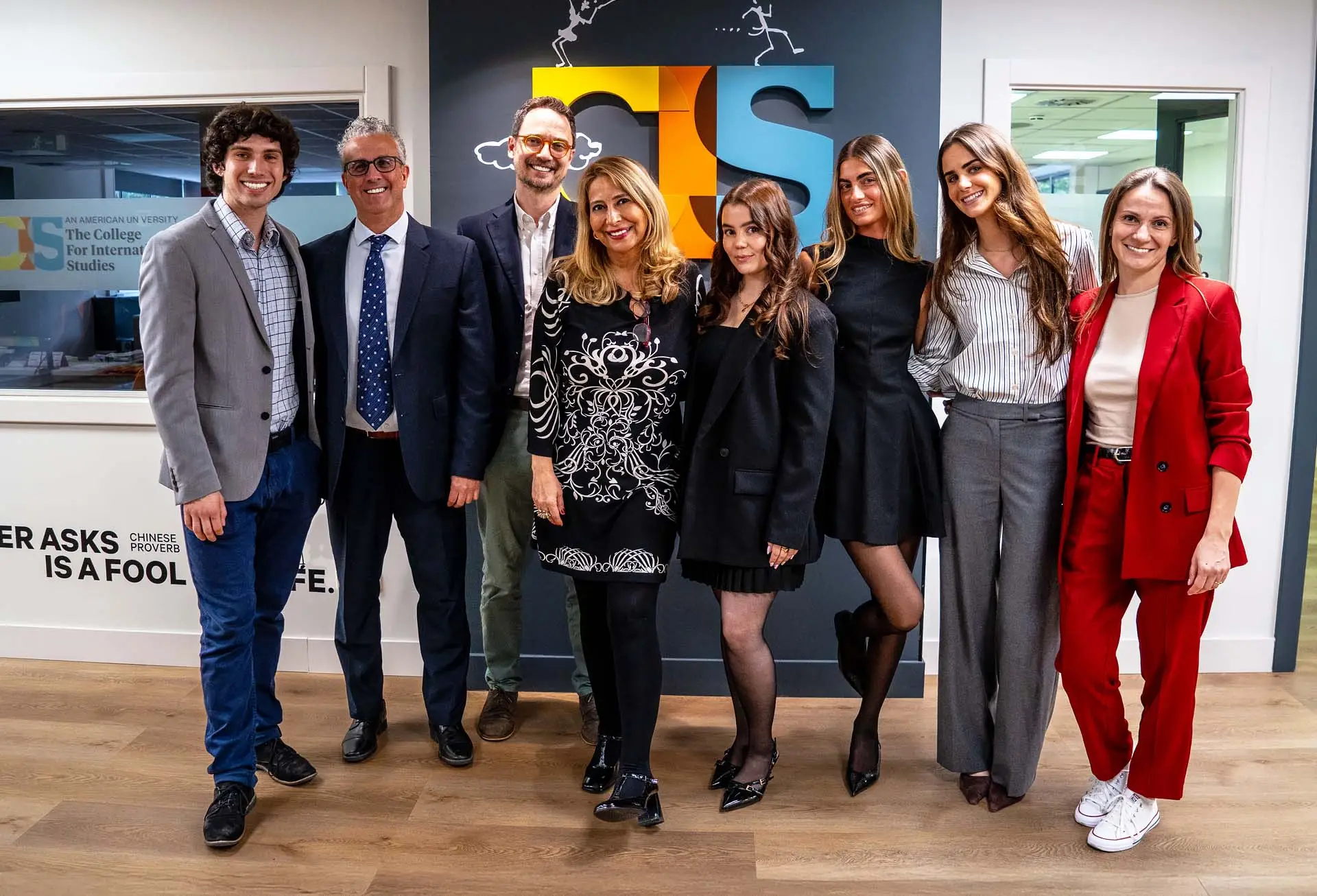
Professors Alexandra Ruiz-Gómez and José Ruiz-Canela guide CIS University students through the challenges of the Senior Thesis process.
At CIS University – Endicott International, the Senior Thesis represents the final and most demanding challenge of a student’s academic journey. It’s a year-long process that tests perseverance, critical thinking, and professionalism. To better understand what makes this project so transformative, Professors Alexandra Ruiz-Gómez and José “Pepe” Ruiz-Canela share their insights, advice, and reflections on what it truly means to complete a Senior Thesis.
How would you describe your role in the senior thesis process at CIS University?
Alexandra: Senior Thesis is the most challenging project students face in their university years, and often in their life up to that point. As professors, our role goes far beyond supervising an assignment. We guide students through a process that teaches real professional skills, such as how to produce a formal academic document, how to revise and improve their own work and supervise the work of others, how to think critically, structure information logically, analyze data so it has meaning, and how to provide value rather than just summarize. We help them develop discipline, responsibility, and academic rigor, which are skills they will need in any professional environment.
Pepe: To this, I want to add that as a Senior Thesis professor, I not only supervise, correct, and provide tips, but students often seek motivation and emotional support because the journey is very tough. I keep reminding students that a senior thesis is about endurance and learning to keep going even when it gets overwhelming. I have been teaching Senior Thesis for 10 years in this university and in other institutions, and I also draw from my own experience as a PhD student. I remember how demanding and exhausting it was, so I try to put myself in the shoes of my students, especially when they feel stuck or discouraged.
How do you guide students in choosing a meaningful and feasible thesis topic?
Alexandra: Students are expected to arrive on the first day of class with a research proposal for their thesis. Most students already have an idea, often inspired by personal interests, professional goals, or their internship experience. When a student does not know what topic to choose, we take time to talk to them about what they enjoy, what they are curious about, or what they see themselves doing in the future. The goal is to help them choose a topic that is meaningful, relevant to their field, and realistic for an undergraduate thesis.
Pepe: It is also essential that the topic is specific and manageable. One of the main reasons why students struggle or fall behind is because their topic is too broad, unclear, or not feasible. If the topic is not properly defined early in the process, it becomes very difficult to design the research, collect data, and make progress. A well-focused topic is the key for a successful thesis.
From your experience, what distinguishes a strong thesis from an average one?
Pepe: A strong thesis shows real understanding and original thinking. It does not just collect information, but analyzes it, makes connections, and answers the research question clearly. Arguments are developed with logic, supported by evidence, and presented in a well-structured way.
Alexandra: What also makes a thesis strong is consistency. The formatting, writing quality, citations, research design, and analysis are all carefully developed and revised. Students who take the time to revise and refine their work multiple times and apply feedback always stand out. In contrast, an average thesis often summarizes sources without deeper analysis, lacks structure, or shows minimal revision. The difference is discipline, consistent work, critical thinking, and attention to detail.
What is the biggest challenge students usually face during their thesis journey?
Pepe: One of the biggest challenges is procrastination. A thesis is a long and demanding process that must be built step by step. Many students try to rush or leave things for the last minute, and this makes the process much harder.
Alexandra: Indeed. Many students would improve significantly just by reading and following instructions. It is important to check them before you start your work, while doing it, and at the end to make sure you comply with requirements. Another challenge today is the temptation to rely too much on AI. Using AI is not the problem. The problem is when students copy and paste without questioning or revising the content. If they do that, they do not learn how to think critically or provide value. In a world where AI tools are easily accessible, the people who will stand out are the ones who can think critically, verify information, and challenge AI to produce better work.
When grading, what aspects of a thesis do you value most?
Alexandra: The grade is based on both formal aspects and academic content. It is essential to present documents correctly because the credibility of the work can be undermined by something as simple as a poorly designed cover page, inconsistent fonts, or ignoring formatting rules. However, the most important element is critical thinking. I value the ability to question things always and think independently, to analyze information rather than simply describe it, and to contribute meaningful insight supported by evidence.
Pepe: When grading, I evaluate both the quality of the work and the attitude behind it. A strong thesis requires solid research questions, credible sources, methodological rigor, analytical depth, and accurate APA formatting. But beyond technical execution, I value the student’s academic attitude: consistency, responsibility, intellectual honesty, willingness to revise, and genuine ownership of the research process.
What are the most common pitfalls or mistakes students should avoid?
Alexandra: As Pepe mentioned, I also want to stress the importance of choosing a topic that is clearly narrowed down. When a topic is too broad, it does not allow for in-depth discussion or meaningful analysis. Another very common pitfall is not revising work. This is why I always tell my students that writing is only one part of the process. For every hour spent writing, at least three more are needed to revise, edit, proofread, check citations, and ensure information is correct.
Pepe: Other common mistakes are not understanding that a literature review is different from an essay and not preparing properly for the oral defense. The defense requires not only summarizing your work but also showing deep understanding and readiness to answer questions.
Do you see the Senior Thesis as a reflection of a student’s academic journey?
Alexandra: Not always. Good students tend to perform well because they already have discipline and consistency. However, some students who struggled before can still succeed if they work hard and take the process seriously.
Pepe: The Senior Thesis is not just an academic project. It is the bridge between knowledge and practice, where students learn how research shapes real-world decisions and develop the mindset of future professionals.
What do you hope students take away from the thesis experience, beyond a grade?
Alexandra: We are certain that students take much more than a grade from this process. Many of them say it was one of the hardest courses, but also the one they feel most proud of. They learn discipline, independence, research skills, and discover they are capable of more than they thought.
Pepe: Furthermore, the Senior Thesis course allows students to jump into the real business world. The tools and soft skills they learn can be applied to any professional environment.
If you could change one thing about the Senior Thesis process, what would it be?
Alexandra: If I could change one thing, it would be the timing. Many students only take the Senior Thesis seriously once the deadlines get close. I would like the process to begin earlier, with more training in academic writing, research methods, and tools like Mendeley or Excel.
Pepe: Even smaller groups would also allow for more personalized guidance and meaningful learning. The Senior Thesis is not just the culmination of a degree; it’s a transformative experience that helps students grow intellectually and professionally.
Through their reflections, Professors Pepe and Alexandra remind us that the Senior Thesis is much more than a final paper; it’s a journey of growth, resilience, and discovery. Their passion for teaching and their dedication to student success make this demanding process one of the most rewarding experiences at CIS University.