
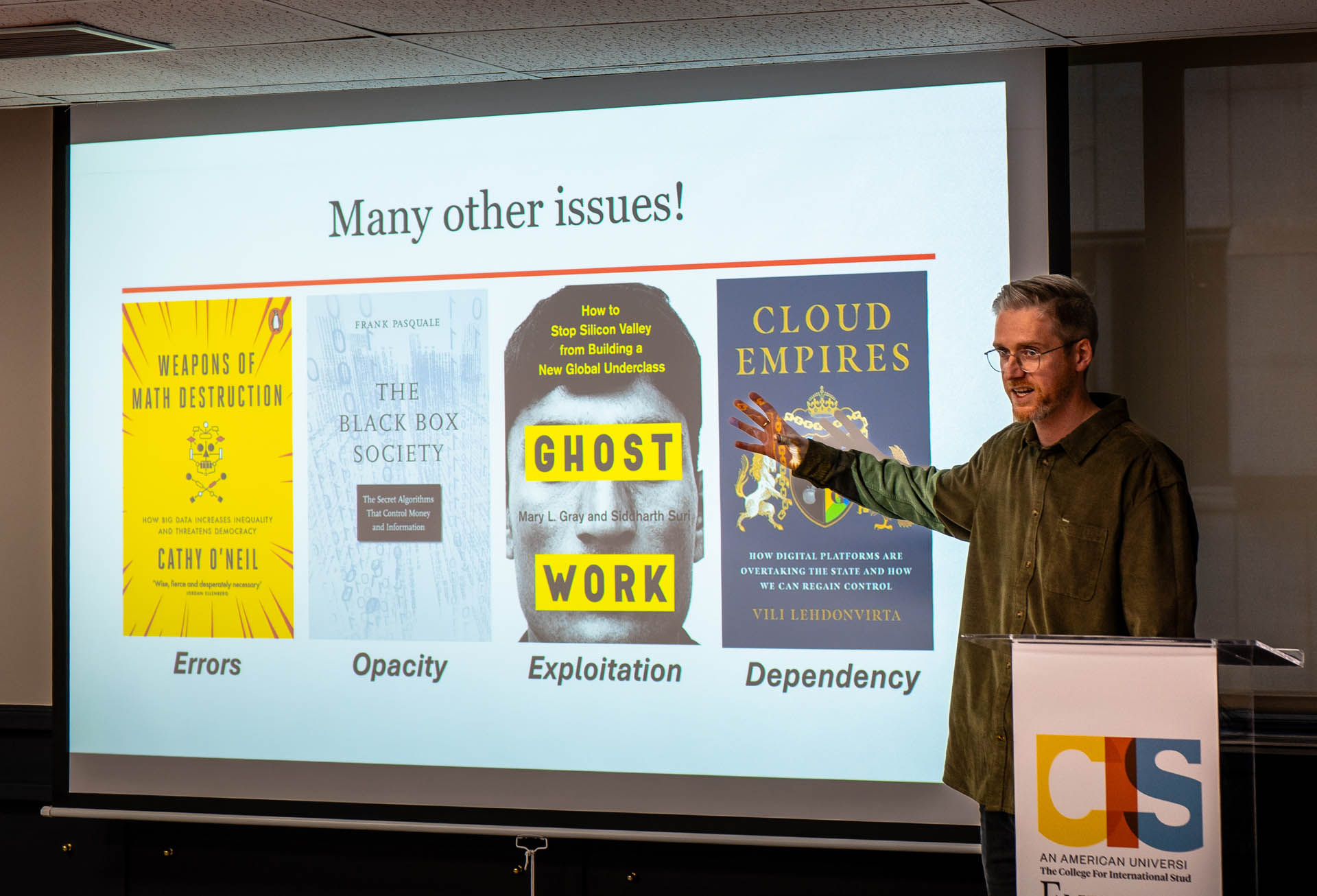
The first lecture of the semester, organized by the Applied Humanities Research Group GINA (Global Imperial & National Affairs) at CIS University, addressed one of the most pressing debates of our time: the social, political, and human impact of artificial intelligence.
The session was opened by Dr. Alex Feldman, coordinator of the GINA program, who introduced the guest speaker, Thomas Redshaw, PhD, Professor of Digital Society at the University of Salford. With more than a decade of experience in teaching and research on the social impact of new technologies, Redshaw has recently focused his work on artificial intelligence after completing the Oxford Artificial Intelligence Programme and assuming the role of Digital Champion at his institution, where he promotes the ethical integration of AI in higher education.
Under the title “Artificial Intelligence, Power, and Human Rights: A Sociological Approach,” the lecture proposed a sociological perspective on artificial intelligence, moving beyond a purely technical view to focus on the social and labor relations, as well as the infrastructures, that sustain these systems. Redshaw invited the audience to reflect on the social consequences of AI and on how human rights frameworks can serve both to resist harmful uses and to guide the development of more just and human-centered technologies.
From the outset, the speaker directly engaged the audience—composed of students, faculty members, and CIS University Academic Dean G. Emanuele Adamo—by asking about their everyday use of AI and the purposes for which it is employed. From there, he structured his talk around the growing integration of artificial intelligence into contemporary social and labor relations.
Redshaw presented studies showing a steady increase in AI use among university students in the United Kingdom, as well as its incorporation into recruitment and selection processes by major technology companies and consulting firms. This trend, he explained, suggests that governments and institutions are increasingly compelled to reorganize their work structures around algorithmic systems.
During the lecture, the speaker referred to the definition of artificial intelligence proposed by researcher Ewa Luger, who conceives it as “an environment of systems that affects the way people learn and understand the world.” From this perspective, Redshaw warned that, sooner or later, AI systems tend to collide with the human and labor rights of the population.
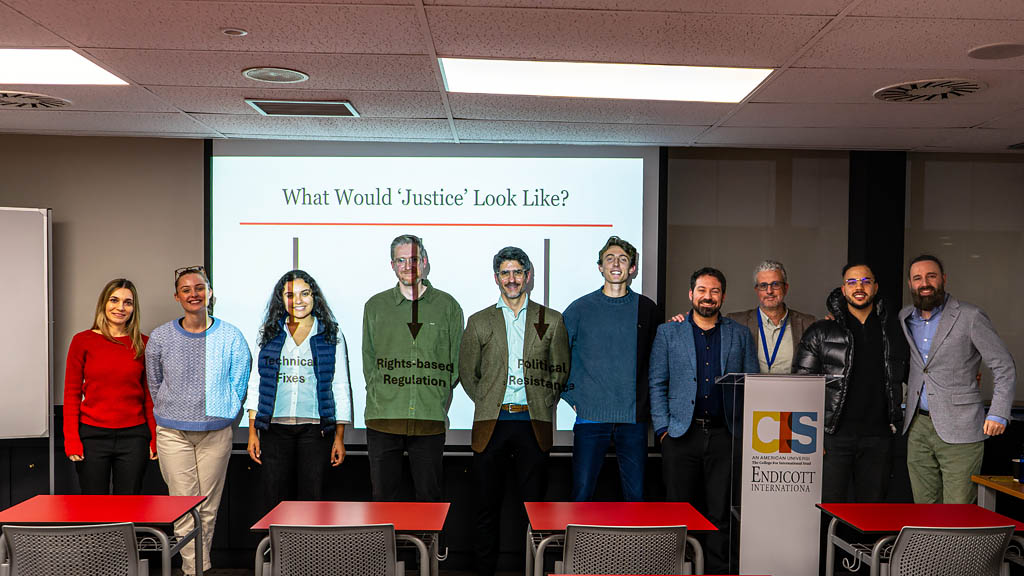
Among the examples discussed, he highlighted the use of predictive algorithms in crime prevention, which often disproportionately penalize the most vulnerable communities. These technologies, he explained, generate feedback loops that reinforce police surveillance in specific areas, perpetuating structural inequalities in a self-sustaining cycle. He also addressed the environmental impact of artificial intelligence, emphasizing the high water consumption required to cool data centers, the dependence on rare earth materials, and the precarious labor conditions associated with maintaining these infrastructures.
With this inaugural session, GINA launches a new semester of seminars that reinforce its commitment to critical thinking, interdisciplinary analysis, and the study of major contemporary challenges through the lens of applied humanities.