
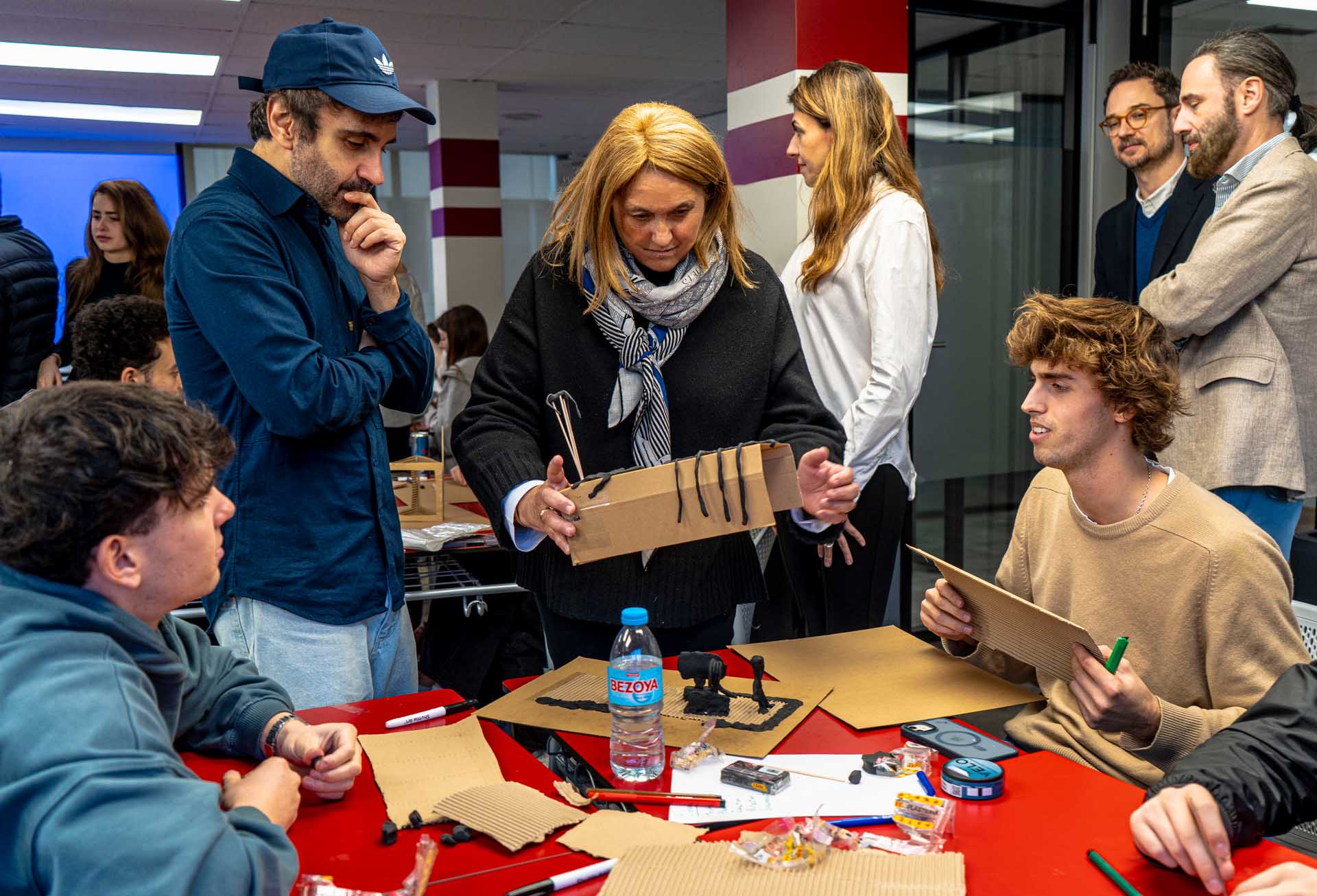
In line with its commitment to addressing major contemporary challenges, CIS University successfully hosted the first edition of the workshop “Reclaiming the Future: Technology, Work & Human Rights.” This initiative, developed by CIS University in collaboration with the RFK Human Rights Spain Foundation, was led by Professor Laura López Paniagua, PhD, and featured the participation of renowned contemporary artist Karlos Gil.
The event brought together students from the three groups of Visual Arts & Cultural Values II for a day combining reflection, artistic creation, and dialogue, reinforcing the role of art as a tool for social awareness.
A Humanistic Introduction from CIS University
The workshop opened with remarks from Dr. Laura López, professor in the Department of Humanities, who emphasized the importance of art and culture as essential components of CIS University’s academic identity. López highlighted that this activity represents “an opportunity to think about the world by asking the right questions,” reminding students that “the university aims to educate them not only through technical knowledge, but through a sensitive, critical, and humanistic perspective.”
Following her introduction, Anthony Verrecchio, Director of the RFK Human Rights Spain Foundation, addressed the students with a direct question that set the tone for the workshop: “Do you consider your life easy?”
Building on this reflection, Verrecchio underscored how each person’s opportunities, rights, and challenges vary greatly depending on the part of the world in which they were born, inviting the students to examine the diverse realities and dynamics that shape our societies.
Art as Shelter, Reflection, and Action
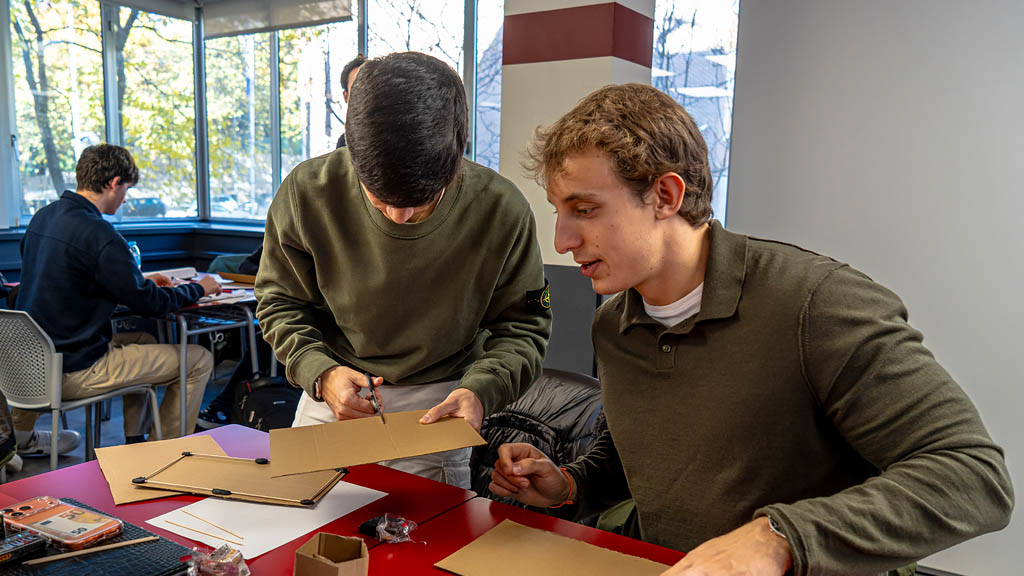
Artist Karlos Gil guided the workshop through two participatory sessions inspired by the central themes of his work: technological acceleration, labor automation, industrial memory, and environmental fragility. After presenting some of his recent projects, he invited students to translate their reflections into the creation of a collective object: a “shelter.”
This “shelter” served as a metaphor for a safe space, a place from which to protect oneself, think, and take action in response to the issues each group sought to address, ranging from automation to human rights to environmental degradation. The activity combined creativity with hands-on materials, allowing students to work from personal experience toward a collective project.
The workshop concluded with a visit from María Díaz de la Cebosa, President of CIS University and of the RFK Human Rights Spain Foundation, who toured the various shelters presented by the teams and engaged in conversation with the students about their creative processes.
During the closing, Karlos Gil shared a final thought that captured the spirit of the workshop: “We are not part of the future… yet. We are the present. But by creating a space or shelter for the problems we want to solve, we are reclaiming the future.”
Learning to Transform the World
For CIS University, the workshop reinforces its commitment to an integral educational approach that connects disciplines, fosters critical thinking, and transforms the academic experience into a driver of change. This activity is part of a broader pilot project developed by Dr. Laura López and the RFK Human Rights Spain Foundation, representing another step forward in creating initiatives that allow young people to explore, understand, and act upon the challenges of our time.